1. Why Buyers Are Moving on Bakery and Ready-Meal Assets
Buyers in this market aren’t hunting volume. They’re hunting reliability. In a sector where freight, labour and grain costs all move independently, the premium now sits with operations that don’t wobble when the inputs do.
The sweet spot is niche but scalable categories: frozen pastry, premium food-service bread, par-baked lines, regional favourites, bao and dumplings. These hold margin better than mass-market bread, resist private label erosion, and come with consumer loyalty that doesn’t vanish in a promotional cycle.
Vertical links are also drawing interest: mills, dough lines, ingredient processors, because security of cost and supply now matters more than headline growth. Buyers don’t want empire-building. They want fewer ways for a business to go sideways.
In short: reliability has become the real premium SKU.

What Actually Sold in 2025 (And Why It Matters)
Buyers don’t pay a premium for size. They pay a premium for certainty. Every successful wholesale A lot more happened than the headlines captured:
- Woolworths secured its ready-meal backbone by taking full control of City Kitchen.
- George Weston strengthened its premium food-service position by acquiring Noisette.
- Patties extended its regional footprint with National Pies.
- Nissin deepened its frozen pastry capability with ABC Pastry.
- ABF absorbed The Artisanal Group, reinforcing its specialty bakery portfolio.
- Bridor added Laurent, sharpening its edge in high-end pastry.
- Upstream, Summit picked up the Guyra stockfeed mill, while Ridley continued rationalising its Tasmanian network.
Different buyers. Different categories. Same theme:
Each acquisition solved a specific operational or strategic problem, not a scale problem.
If you sit anywhere in the wheat → bakery → distribution chain and can demonstrate dependable output in a category consumers stick with, you’re visible.

How to Make Your Bakery or Ready-Meal Business Stand Out
Buyers do not reward complexity. They reward repeatability.
If your QA files don’t rely on luck, if labour isn’t held together by one heroic supervisor, and if your ovens, chillers and prep flows behave the same way every day, you are already outperforming a surprising share of the market.
The strongest growth continues in value-added formats: frozen pastry, par-baked and thaw-and-serve lines, ethnic bakery products, and ready-meal components. These carry healthier margins, steadier demand and less exposure to promotional resets.
Operators who modernise plant, fix their energy profile, and tighten their production discipline are moving into a different valuation tier. Those who rely on “big weeks” or one-off contracts are not.
A simple truth:
Any bakery can produce a great batch on a good day. Buyers pay for the ones that make every day a good day.
Energy. The Cost Line That Separates Competitive from Vulnerable
Energy now functions as a competitive differentiator, not an overhead.
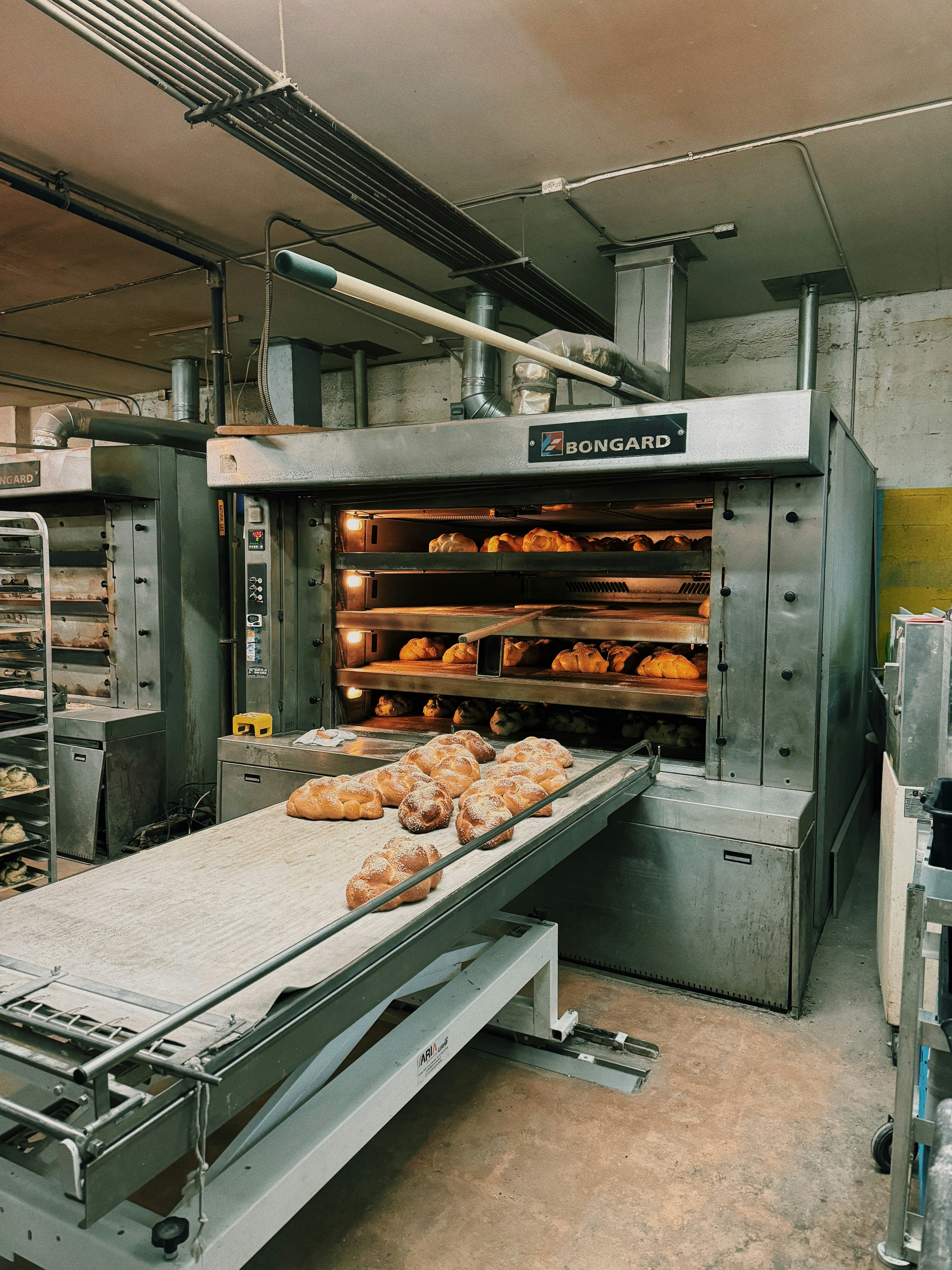
While utilities officially sit around 1.4% of revenue, the number disguises the real issue: bakeries are energy-dense operations with ovens and refrigeration doing most of the heavy lifting. When electricity jumps, it jumps straight into the margin.
Buyers are now checking energy intensity per unit as closely as wages, maintenance and freight. Plants with modern ovens, insulated storage, tight cold-chain and sensible production cycles keep their margins stable. Older facilities don’t.
Forward-looking operators are:
- shifting production away from peak periods,
- replacing high-draw legacy equipment,
- insulating refrigeration and optimising bake schedules.
It isn’t for marketing tours. It’s because predictable cost = predictable EBITDA, and predictable EBITDA gets valued.

Food-Service Is Becoming Bakery’s Most Valuable Channel
Food-service is now shaping the sector’s economics.
Bread and rolls represent $3.2 billion and 59% of bakery revenue, and a growing share flows through venues rather than household baskets. Once a café or restaurant locks in a format that works: loaves, par-bakes, pastry, thaw-and-serve. They don’t rotate lightly. Switching suppliers creates operational risk, not convenience.
This makes food-service volume stickier, less price-reactive, and operationally loyal.
For suppliers, the result is a better margin profile: fewer promos, fewer resets, steadier production runs.
Capability, not salesmanship, wins the channel.
- Reliable formats
- Cold-chain discipline
- Consistent delivery windows
- Zero-drama QA
Food-service is no longer the side-project of bakery.
It’s the engine room.